
Coconino County Dissolution Records
The Clerk of Superior Court keeps all dissolution of marriage records for Coconino County at the main courthouse in Flagstaff. This county covers a large part of northern Arizona. It includes the Grand Canyon and several mountain ranges. People from Flagstaff, Sedona, and Williams file dissolution cases at the same court. The clerk office has records going back decades. These files contain petitions, responses, financial disclosures, custody orders, and final decrees. Most records are public. You can search for cases online or visit the courthouse to get copies of documents in Coconino County.
Coconino County Quick Facts
Clerk of Superior Court Office
All dissolution filings in Coconino County go through the Clerk of the Superior Court in Flagstaff. This office serves the entire county. Staff help people file new cases and get copies of old records. The clerk maintains files for every dissolution case heard in Coconino County courts.
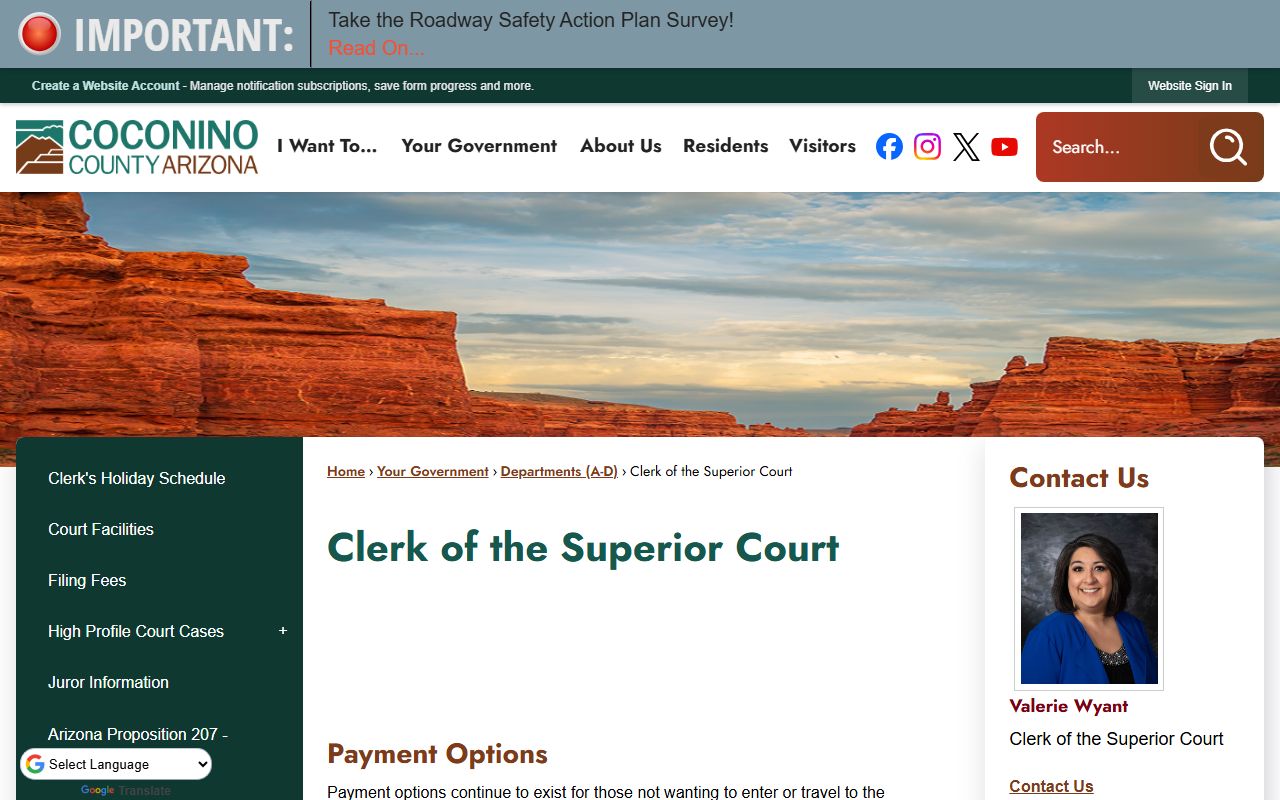
You can visit the clerk office at 200 N. San Francisco Street, Flagstaff, AZ 86001. Call (928) 679-7600 if you have questions. The law library has a separate line at (928) 679-7540 or toll free at 877-806-3187. Staff can help you understand what you need to file or how to get old case papers from Coconino County.
The courthouse sits in downtown Flagstaff near the old train depot. Parking can be tight on busy days. Come early if you need help from the clerk. Hours run from 8:00 a.m. to 5:00 p.m. Monday through Friday. The office closes on weekends and state holidays in Coconino County.
Web Based Services
Coconino County offers several online tools for court users. The web services page lists all available systems. You can search cases, file documents electronically, and access court records through these portals.
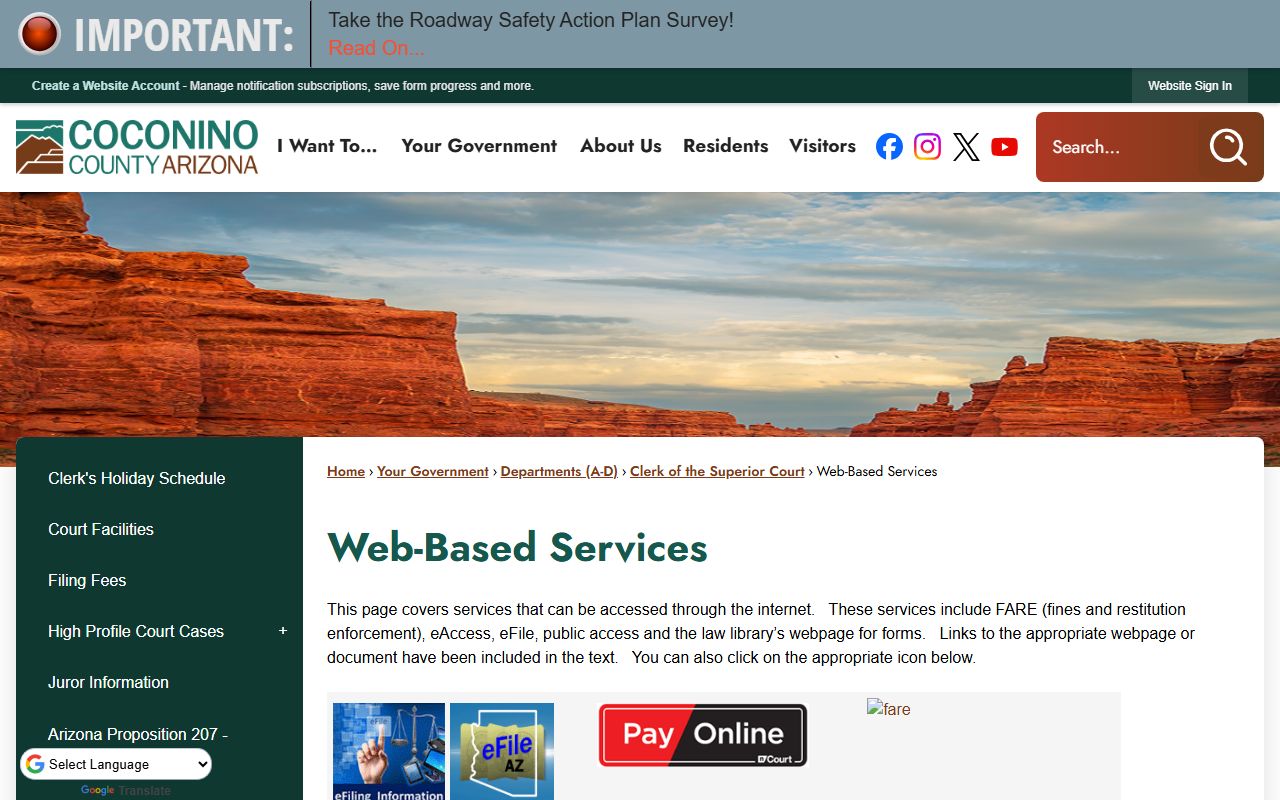
The eAccess system lets you view some court documents online. This costs $10 per document. Not all family court papers appear in eAccess due to privacy rules. The Public Access portal is free. It shows case information and docket entries. Type a name or case number to search for dissolution cases in Coconino County.
Coconino County uses eFiling for many case types. This lets lawyers and parties submit papers online instead of going to the courthouse. Check with the clerk about which forms can be filed electronically. Some documents still need original signatures or must be filed in person at the Flagstaff courthouse.
Note: Not all court records appear online due to privacy protections for family cases.
How to File for Dissolution
You must meet Arizona residency requirements to file in Coconino County. Under A.R.S. Section 25-311, one spouse needs to live in Arizona for 90 days before filing. You file where either spouse lives now. If you live in Coconino County, you file at the Superior Court in Flagstaff.
The petition starts your dissolution case. This paper names both spouses and states what you want from the court. You pay the filing fee when you submit the petition. The clerk assigns a case number and stamps your papers. You then must serve your spouse with copies. Proof of service goes into the file. This shows the other party got notice of the case in Coconino County.
Arizona uses no-fault dissolution rules. Under A.R.S. Section 25-312, the court only needs to find the marriage is broken. You do not prove fault. One spouse stating the marriage cannot continue is enough. After both sides respond or if time runs out, the court can hold hearings and issue orders.
Coconino County offers AZTurboCourt for people filing without lawyers. This online tool costs $15 plus regular court fees. It walks you through filling out dissolution forms step by step. Not every case type works with TurboCourt. Check if your situation qualifies before using this system in Coconino County.
Costs and Fees
Coconino County charges set fees for court services and records. Copies cost $0.50 per page. Certification adds $30 to $40 depending on the type of document. The clerk can give you the exact cost when you request records. Most counties in Arizona use similar pricing.
Filing a new dissolution case has higher fees than getting copies. You pay the filing fee when you submit your petition. Coconino County sets these fees based on state rules. Contact the clerk for the current filing fee schedule. It can change over time in Coconino County.
People with low income can ask for fee waivers. You file a form with the court showing your financial situation. A judge reviews waiver requests. If approved, you pay less or nothing at all. This helps people who cannot afford full court costs. Ask the clerk for the fee waiver form when you file in Coconino County.
Search Cases Online
Use the statewide Arizona Public Access portal to search Coconino County dissolution cases. This free system covers all Superior Courts in Arizona. Type in a party name or case number. The system shows matching cases from Coconino County.
Click on a case to see more details. The docket shows all filings and court dates. You can see when papers were filed and what the court did. Some information may be hidden to protect children or other sensitive details. Family cases have more privacy rules than other case types in Coconino County.
The online search is free. You do not pay to look up cases or view dockets. If you need copies of actual documents, you may need to use eAccess or contact the clerk directly. Some papers cost money to download or must be picked up in person at the courthouse in Flagstaff.
Information in Case Files
Dissolution case files in Coconino County hold many types of documents. The petition and response start the case. These name the parties and state what each side wants. If there are kids, the file has custody forms and parenting plans. Child support worksheets show income and expenses for both parents.
Financial disclosures appear in most files. Each spouse lists assets, debts, income, and expenses. The court uses these to divide property and set support. Temporary orders may be in the file too. A judge issues these during the case to handle urgent matters. They cover who stays in the home, who pays bills, and when kids see each parent in Coconino County.
The final decree is the key document. It ends the marriage legally. The decree states how property and debts get divided. It sets custody, visitation, and support terms. Under A.R.S. Section 25-325, the decree becomes final when entered by the court. A spouse can ask to restore a former name in this document. You can get certified copies from the clerk for legal use.
Getting Legal Assistance
Several resources help people with dissolution cases in Coconino County. Legal aid programs serve low-income residents. They focus on cases involving abuse or safety concerns. Call to see if you qualify for free help. The Arizona State Bar runs a referral service. Call 1-800-392-5660 to get connected with a family law lawyer. The first meeting costs up to $50 for 30 minutes.
Self-help resources are available online through Arizona Court Help. This site has guides for people filing without lawyers. You can find instructions and forms for dissolution cases. The site also lists resources across the state. Official court forms are at the Arizona Courts Self-Service Center. These are the same forms used in Coconino County.
The law library in Flagstaff has books and resources. Call (928) 679-7540 for help finding information. Some lawyers offer free first meetings. Others charge reduced rates based on income. Check with local bar associations or legal aid for names of attorneys who serve Coconino County.
Are Records Public
Yes, dissolution records are public in Coconino County. Arizona law gives people the right to see court files. You do not need to be part of the case. You do not have to explain why you want the records. The clerk must provide access to public files.
Some limits exist for privacy. Details about minor children may be hidden. Financial account numbers might be redacted. A party can ask the court to seal records in rare cases. The judge must approve this after a hearing. Most dissolution files remain open to the public in Coconino County.
You can request records several ways. Visit the courthouse in Flagstaff. Mail a written request to the clerk. Use online systems to search cases. Each method has different rules and costs. Check with the clerk about the best way to get what you need from Coconino County.
Cities in Coconino County
Coconino County covers a large area of northern Arizona. Flagstaff is the county seat and largest city. Sedona sits in the southern part of the county. Williams, Page, and other small towns are here too. Parts of the Navajo Nation and Hualapai Reservation fall within county lines. All residents file dissolution cases at the Superior Court in Flagstaff regardless of where they live in Coconino County.
Nearby Counties
These counties border Coconino County. Make sure you file in the correct county based on where you or your spouse lives. The court needs proper jurisdiction over your case.