
Find Arizona Dissolution Of Marriage Records
Arizona dissolution of marriage records are held at county Superior Courts across the state. Each of Arizona's 15 counties keeps its own case files. You can search these records to find case details, court orders, and final decrees. Some counties offer online access through statewide portals. Others need you to visit or call their Clerk of Superior Court office. Most records are open to the public. You can get copies for a fee. This guide shows you where to look and how to get the records you need in Arizona.
Arizona Dissolution Of Marriage Quick Facts
Where Arizona Keeps Dissolution Records
Arizona does not have a state office that keeps all dissolution of marriage records. Each county stores its own files. The Clerk of the Superior Court in each county holds all case papers from start to finish. This means you need to know which county handled the case before you can search. Most cases get filed where at least one spouse lives.
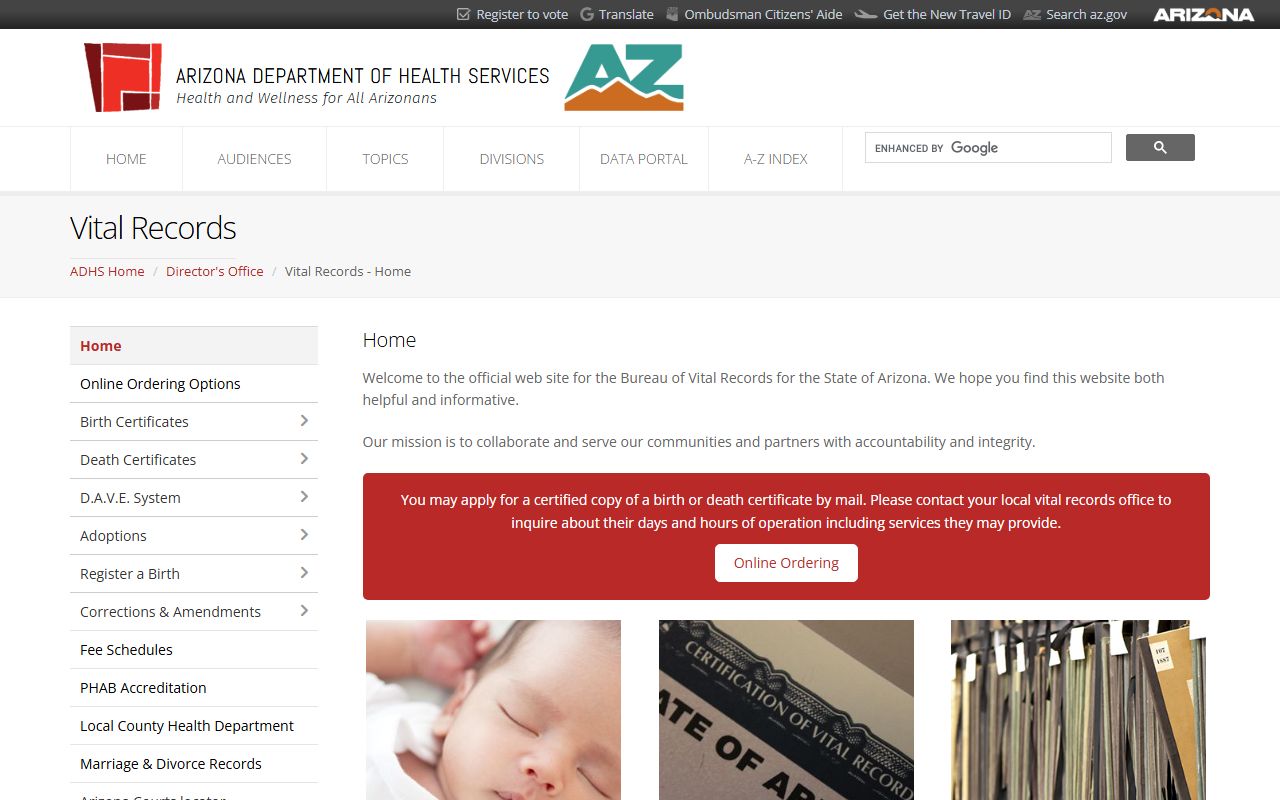
Some people look for records at the Arizona Department of Health Services. That office does not keep dissolution records. The health department only tracks birth and death certificates. If you want a divorce certificate, they will tell you to contact the county court. This is true across the state. You must go to the county level to find what you need.
The Arizona Department of Health Services website explains this on their vital records page. They direct people to use the court locator for dissolution records. The page shows that only birth and death records come from the state health office. All marriage and divorce matters go through county courts in Arizona.
Historical records from before 1972 may be at the Arizona State Archives in Phoenix. The Archives hold some old case files and indexes. Their collection ranges from 1864 to 1972 and varies by county. You can contact the Archives for help with very old records. Most people search for recent cases at the county level.
Search Dissolution Cases Online
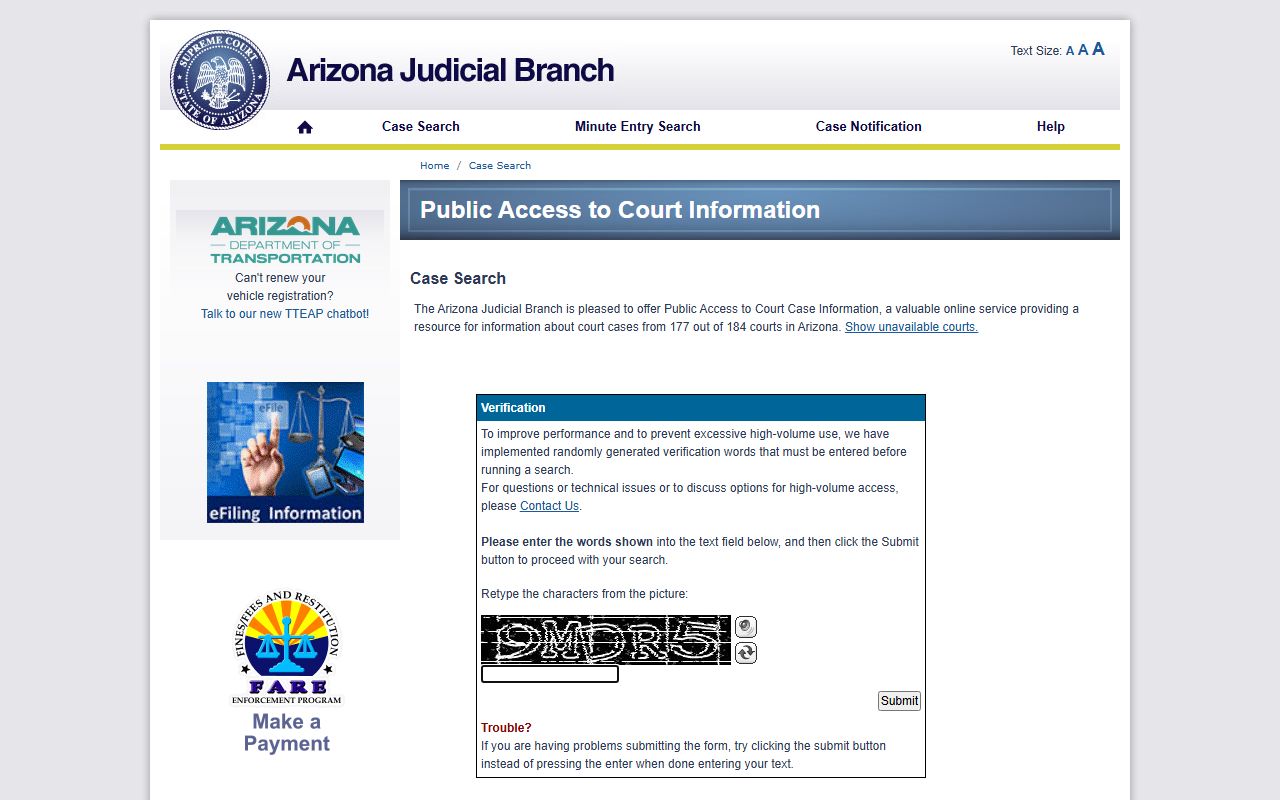
Arizona offers two main online systems for court records. The first is Arizona Public Access. This free portal lets you search by name or case number. It covers more than 177 courts across the state. You can see case information and docket entries at no cost. The site works for Superior Court cases, which include most dissolution filings in Arizona.
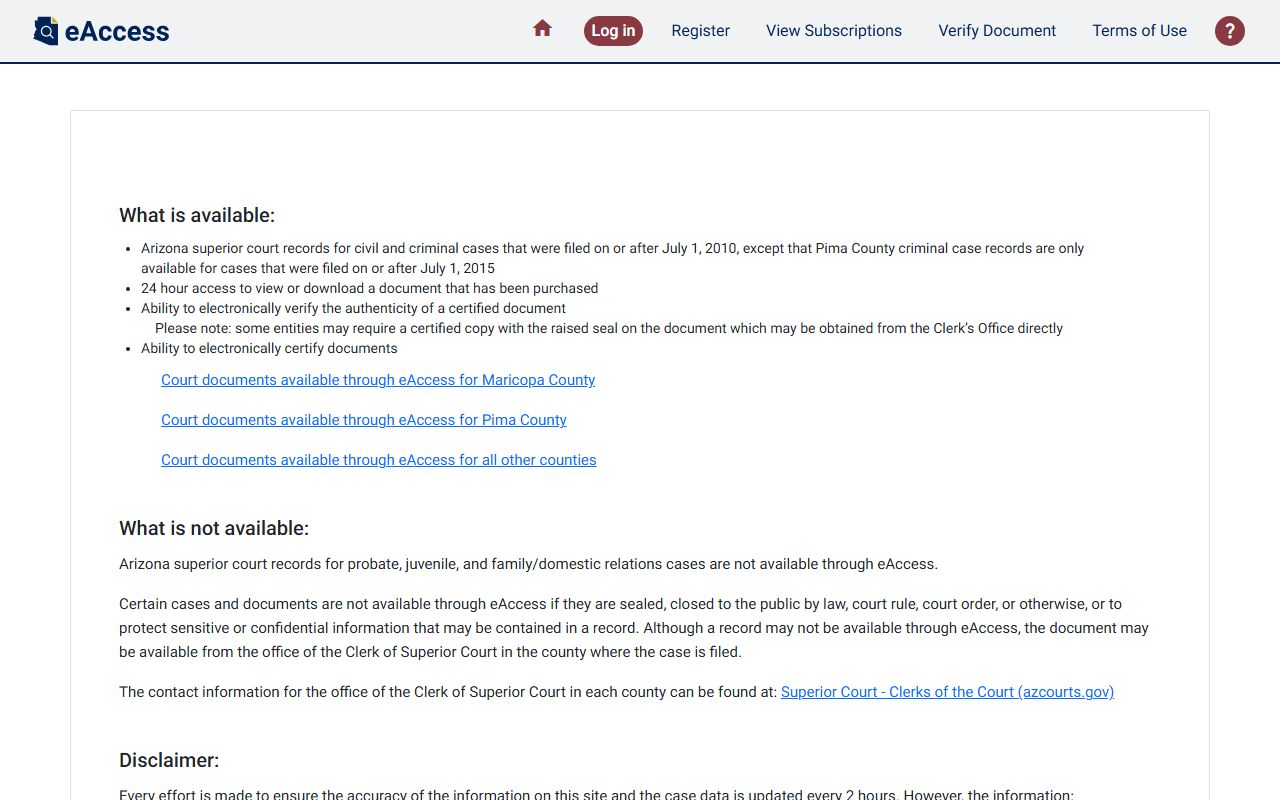
The second system is eAccess. This is a paid service. You can buy documents for $10 each. The system has limits on what you can see. Family court cases are not always available through eAccess. Some counties block these records online to protect privacy. You may need to request them in person or by mail from the county clerk.
Not every county has full online access. Smaller counties may only list basic case info. To get actual documents, you often need to contact the Clerk of Superior Court directly. Each county sets its own rules for remote access. Check the county pages on this site to see what is available in each area of Arizona.
Filing Cases Online
Arizona has an eFiling system called AZTurboCourt. This tool helps people start or respond to family law cases without hiring a lawyer. You can use it to file a dissolution case or create a parenting plan. The system guides you through each step with questions and forms.
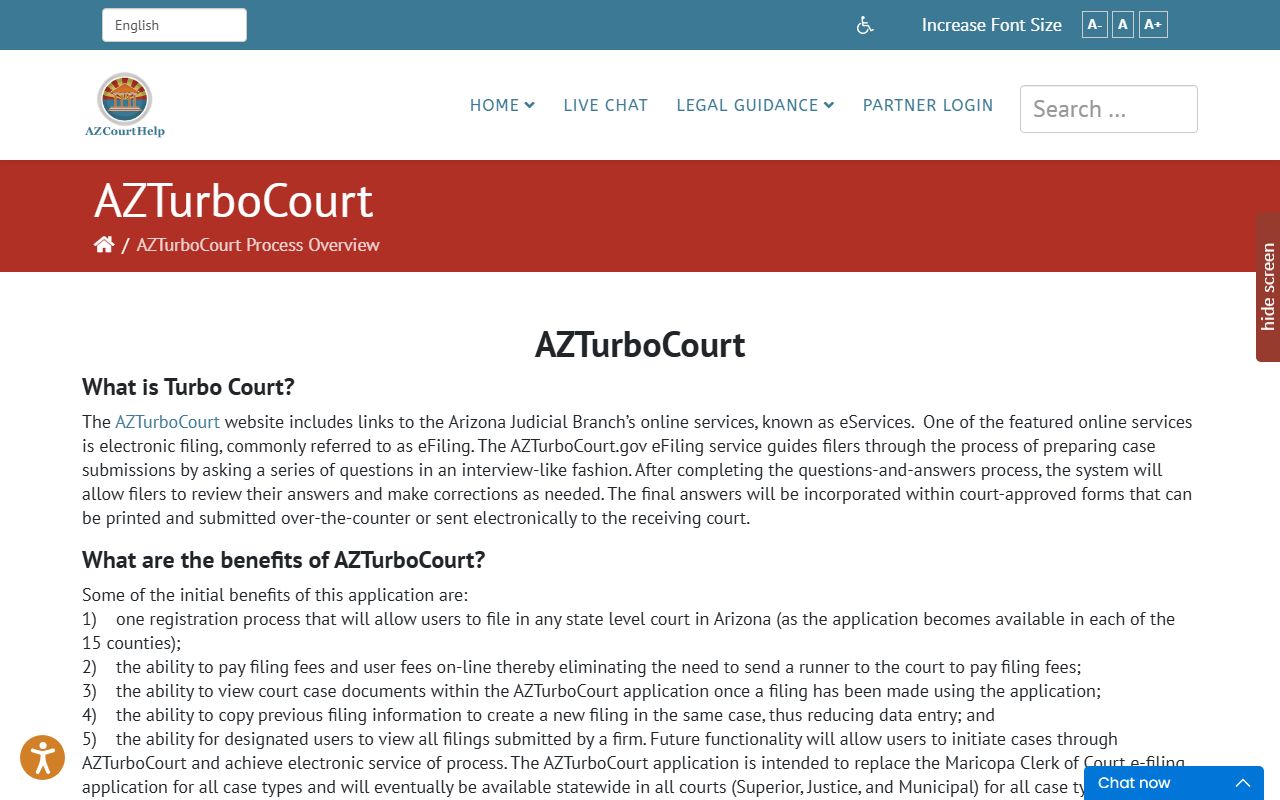
Ten counties currently offer AZTurboCourt. These are Cochise, Coconino, Gila, La Paz, Maricopa, Mohave, Pima, Pinal, Santa Cruz, and Yuma. The tool costs $15 to use on top of regular filing fees. If your county is not on this list, you need to file papers in person at the courthouse or by mail.
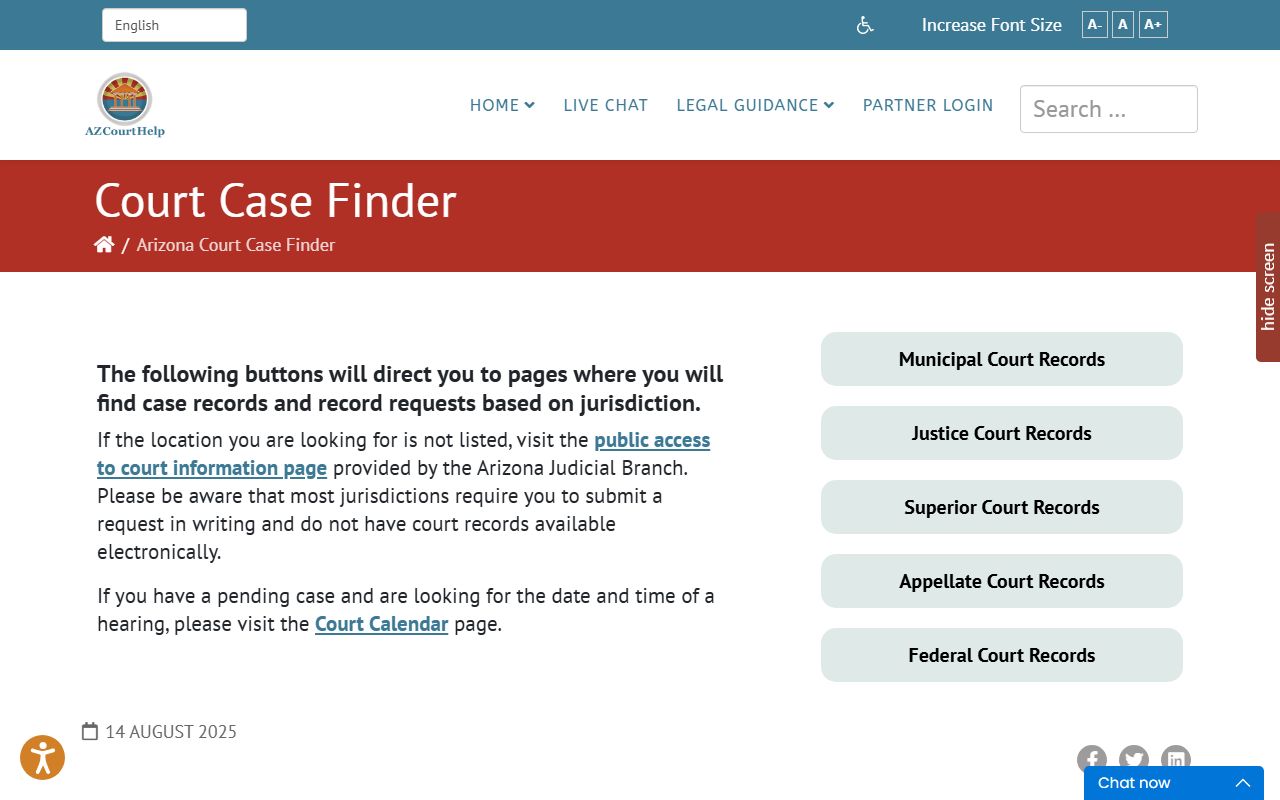
The Arizona Court Case Finder page notes that most courts do not have all records online. Many require written requests. This applies even in counties with some online access. You may need to submit a formal records request to get certain documents from your case file.
Arizona Dissolution Laws
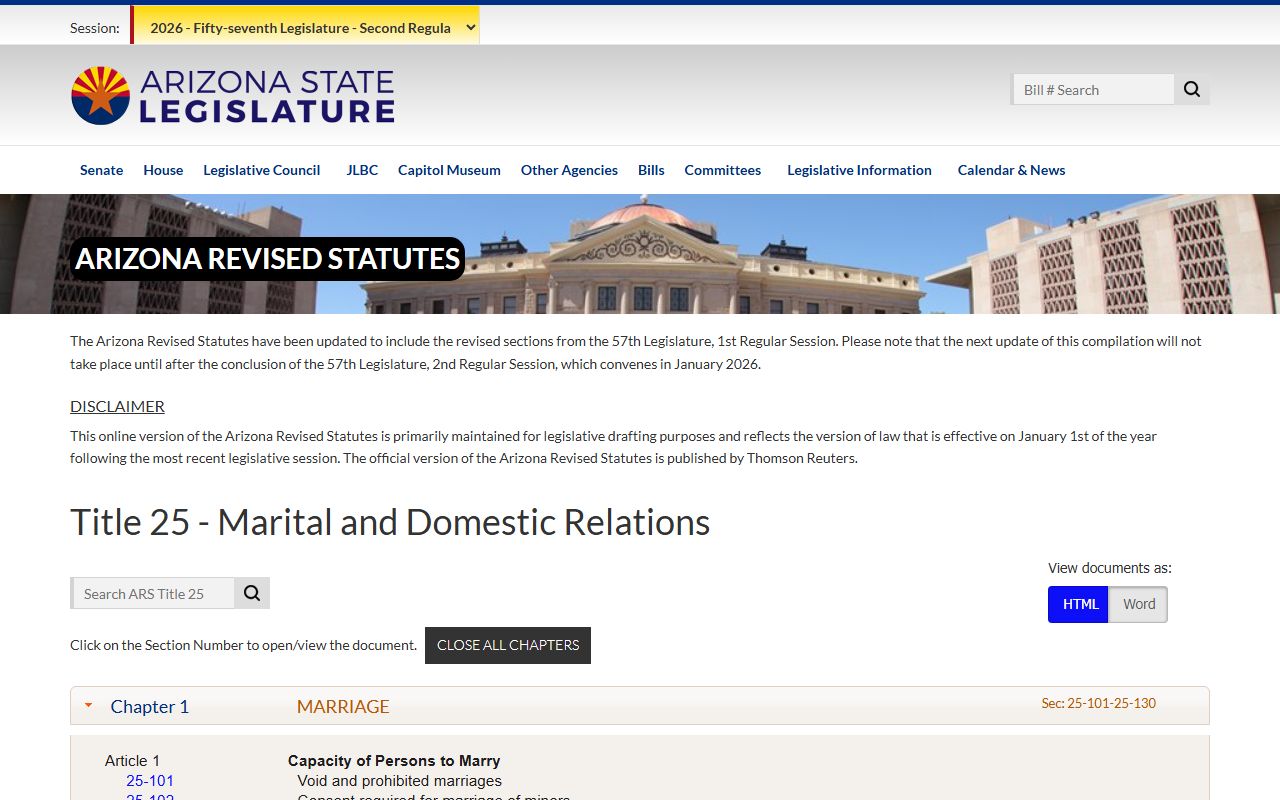
Arizona law controls how dissolution cases work. The statutes set rules for filing, residency, and how courts handle these cases. All rules appear in Arizona Revised Statutes Title 25. This part of state law covers all marital and domestic relations matters in Arizona.
A.R.S. Section 25-311 explains who can file in Arizona. One spouse must live in the state for at least 90 days before filing. This is the residency rule. You file in the county where either spouse lives now. The petition must state that you meet this requirement. The court will check before moving forward with your case.
A.R.S. Section 25-312 sets the grounds for dissolution. Arizona only uses no-fault rules. The court must find that the marriage is irretrievably broken. You do not need to prove fault by either spouse. This makes the process simpler than in some other states. The judge will grant the dissolution if both parties agree or if one party states the marriage cannot be saved.
A.R.S. Section 25-314 covers what goes in the court papers. The petition must include certain facts. These include the date of marriage, whether there are minor children, and what relief you seek. Some information in family cases may be kept confidential under court rules. This protects sensitive details about children and finances in Arizona.
When the case ends, the court issues a decree. A.R.S. Section 25-325 says the decree becomes final when entered. It covers all issues in the case. This includes property, debts, child custody, and support. A spouse can ask to have their former name restored in the decree. The decree is a public record unless sealed by the court.
Arizona also recognizes covenant marriage. This is a special type of marriage with stricter rules. A.R.S. Section 25-903 lists limited grounds for dissolving a covenant marriage. These include adultery, abuse, abandonment, or a felony conviction. Couples in a covenant marriage may also need to complete counseling before filing. Regular marriages do not have these extra steps in Arizona.
What You Find in Case Files
A dissolution case file holds many papers. The petition starts the case. It names both spouses and states what the person filing wants. The respondent files an answer. This either agrees or disputes what the petition says. If children are involved, there may be forms about custody and support.
The file also has financial documents. Each spouse must disclose income, assets, and debts. These forms help the court divide property fairly. Some cases include temporary orders. A judge may issue these early in the case to set rules until the final decree. Temporary orders can cover who stays in the home, who pays bills, and when children see each parent.
The final decree is the most important paper. It ends the marriage and settles all issues. The decree states how property gets split. It sets child custody and support terms if needed. It may order spousal maintenance. Once signed by a judge, the decree becomes part of the permanent record at the county clerk office in Arizona.
Court minutes and hearing notes may also be in the file. These show what happened at each court date. You can see motions filed by either party and the judge's rulings. All of these documents together make up the full case record. You can request copies of any part of the file from the Clerk of Superior Court.
Costs for Records and Copies
Fees vary by county in Arizona. Most counties charge $0.50 per page for copies. Certification adds $30 to $35 per document. Some counties charge a research fee if you do not have a case number. This fee ranges from $30 to $35 per year searched. Mailing copies usually costs $7 to $8 extra.
Filing a new dissolution case costs more than getting copies of old records. Maricopa County charges $376 to file a petition. A response costs $287. Other counties have similar fees. Some offer fee waivers for low income people. You must file a form and show proof of income to qualify for a waiver in Arizona.
If you use eAccess to buy documents online, you pay $10 per document. This is separate from county copy fees. The Arizona Public Access portal is free for searching but you cannot download documents there. You still need to buy them through eAccess or request them from the county clerk.
Legal help costs vary widely. Free services exist for people with low income. Legal Services programs offer help at no charge if you qualify. Hiring a private lawyer can cost hundreds to thousands of dollars. Many lawyers charge by the hour. Some offer flat fees for simple cases. Always ask about costs before you hire anyone in Arizona.
How to Get Case Documents
Start by finding the county where the case was filed. Contact the Clerk of Superior Court in that county. Most clerks have a records request form on their website. You need to provide the case number or the names of both parties. Some clerks can search by name for an extra fee.
You can visit the courthouse in person in most counties. Clerks can help you find the file and make copies. Bring ID and payment. Many clerk offices accept cash, debit cards, and credit cards. Some do not take personal checks. Call ahead to confirm what payment they accept and what hours they are open.
Mail requests work in many counties. Send a letter with the case details, what you need, and your payment. Include a return envelope. Processing time varies. Some counties respond in 3 to 5 business days. Others take longer if they are busy. Check the county page on this site for contact info and local rules.
Note: Some counties may not release certain documents by mail for privacy reasons.
Old Records and Archives
The Arizona State Library and Archives keeps historical records from before 1972. Their collection includes marriage and divorce files from many counties. The range of years varies by county. Some records go back to 1864. These are useful for genealogy research and historical inquiries in Arizona.
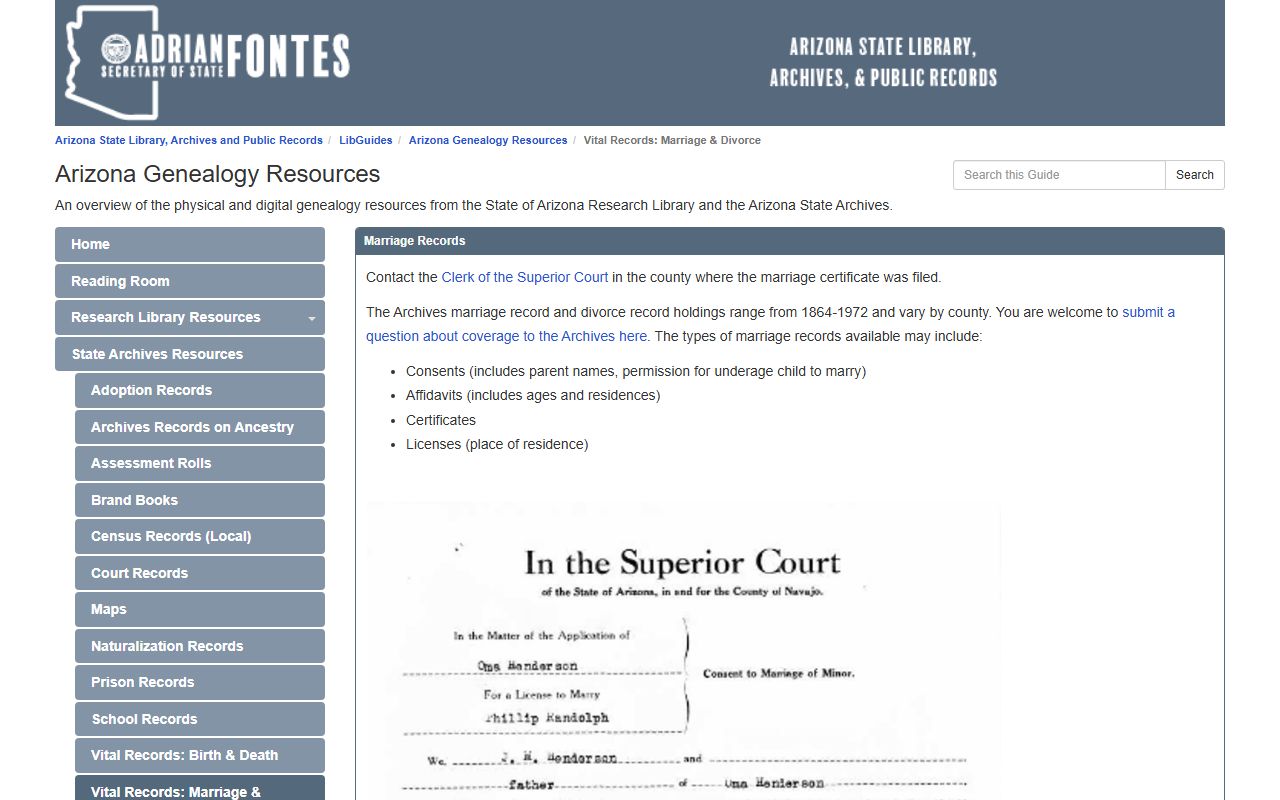
The Archives also has indexes for civil divorce cases. An index lists case names and numbers. You can use it to find old cases even if the full file is not available. Contact the Archives at the Arizona State Library in Phoenix for help. They can tell you what records they have and how to request copies.
For records from 1972 to now, go to the county clerk. The clerk keeps all recent files. Only very old records move to the Archives. If you are not sure where to look, start with the county. They can tell you if records have been transferred to the Archives or another location.
Browse by Arizona County
Each county in Arizona runs its own Superior Court. Pick a county below to find local contact details, online access options, and fee information for dissolution of marriage records in that area.
Dissolution Records in Major Arizona Cities
City residents file dissolution cases at their county Superior Court. Pick a city below to learn about local resources and which county handles cases for that area.