
Search Pima County Dissolution Records
Dissolution of marriage records in Pima County are kept at the Superior Court in downtown Tucson. This county is the second largest in Arizona by population. The Clerk of Superior Court maintains all case files from initial petition through final decree. Pima County includes Tucson and surrounding communities. People can search for dissolution records online, visit the courthouse in person, or request copies by mail. These records help you verify case status, obtain decrees for legal purposes, or research family history in southern Arizona.
Pima County Quick Facts
Superior Court Clerk Office
The Pima County Clerk of Superior Court manages all dissolution records. This office processes filings, stores documents, and handles public records requests. Staff can help you locate cases, understand fees, and get copies of court papers.
The clerk office is at 110 West Congress Street, Room 241, Tucson, AZ 85701. Call (520) 724-3240 for legal records questions. The main line is (520) 724-3200. For email requests, use COCLegalRecordsWeb@sc.pima.gov. Office hours are 8:00 AM to 5:00 PM Monday through Friday. Walk-in service ends at 4:30 PM, so arrive early if you need help in person.
Pima County does not issue divorce certificates. The clerk provides certified copies of decrees instead. This is important to know when you make a request. Ask for a certified copy of the decree, not a certificate. The decree is the legal document that ends your marriage in Pima County.
Public Documents Portal
Pima County offers a Public Docs Portal for viewing some court records online. This system lets you search for cases and view certain documents. Not all family court papers appear online due to privacy rules. The portal works well for basic case lookups.
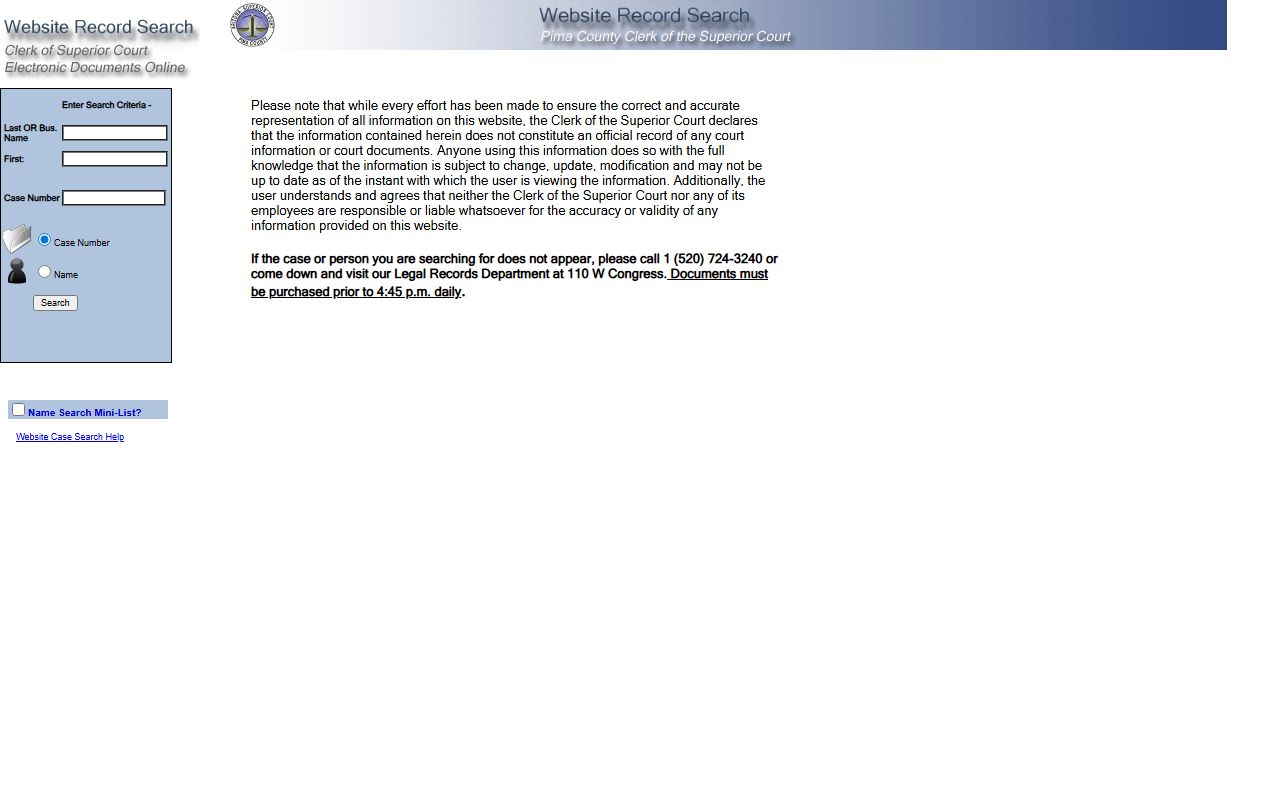
Type a name or case number to search. The system shows matching cases. Click on a case to see available documents. Some files may be restricted. For documents not available online, contact the clerk office. They can tell you how to request copies through other methods in Pima County.
You can also use the statewide Arizona Public Access portal. This free system covers all Superior Court cases in the state. It shows basic case information and docket entries for Pima County. Enter the names of either spouse to find dissolution cases. The system lists filing dates, case numbers, and current status.
How to Request Records
Pima County accepts records requests in person, by mail, and by email. Each method has different processing times. In-person requests often get filled faster. Mail requests take longer but work if you live far away. Email requests go to COCLegalRecordsWeb@sc.pima.gov.
Include the case number or names of both spouses in your request. State what documents you need. Provide your contact information and payment method. Processing takes 3 to 5 business days for mail requests. Call ahead if you need records urgently in Pima County.
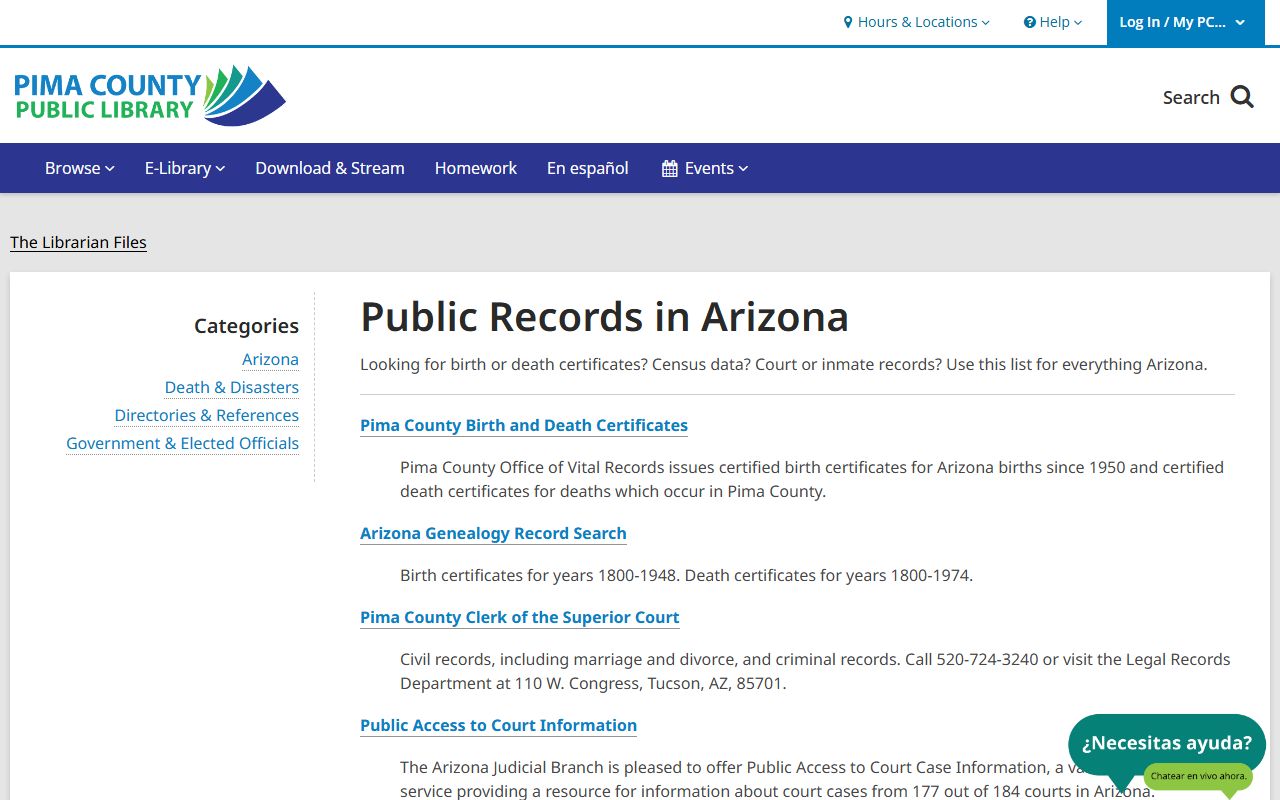
The Pima County Public Library has a guide to public records in Arizona. This resource explains what records exist and how to get them. It covers state and local records including court files. The guide can help you understand the request process before you contact the clerk in Pima County.
Note: Mail requests typically take 3 to 5 business days to process.
Fees and Payment
Pima County charges $0.50 per page for copies. Certified copies cost $35.00 per document. This certification fee applies regardless of how many pages the document has. Postage adds $8.00 if you want records mailed to you. Fax delivery costs $7.00 if offered.
You can pay in person with cash, card, checks, or money orders. Phone payments use Visa, MasterCard, or Discover. Call the clerk to make a phone payment. Online payment options may be available depending on the type of request. Ask about current payment methods when you contact the clerk office in Pima County.
Filing a new dissolution case has different fees than getting copies. Contact the clerk for current filing fee information. Fee waivers are available for people with low income. File a request showing your financial situation. The judge reviews these and decides if you qualify for reduced or waived fees in Pima County.
Filing for Dissolution in Pima County
To file in Pima County, meet Arizona residency requirements under A.R.S. Section 25-311. One spouse must live in Arizona for 90 days before filing. You file in the county where either spouse currently resides. If you live in Pima County, file at Superior Court in Tucson.
Arizona is a no-fault state under A.R.S. Section 25-312. The court only needs to find the marriage is broken. You do not prove fault. One spouse stating the marriage cannot work is enough. This makes the process simpler than in fault-based states.
The petition starts your case. You pay filing fees when you submit it. The clerk gives you a case number. You must serve your spouse with copies of all papers. Proof of service gets filed with the court. After service, the other spouse can respond. If no response comes, you may get a default decree. If both parties agree, you can file a consent decree to speed up the case in Pima County.
The final decree ends the marriage under A.R.S. Section 25-325. It becomes final when the judge signs it. The decree covers property, debts, custody, support, and other issues. A spouse can ask to restore a former name. The decree is a permanent public record. Get certified copies from the clerk for legal purposes in Pima County.
Contents of Case Files
Dissolution files in Pima County include many documents. The petition and response are the main pleadings. These state what each party wants. Financial disclosures show income, assets, and debts. If there are children, you will find custody forms, parenting plans, and support worksheets.
Temporary orders may appear in the file. A judge can issue these during the case. They set rules until the final decree. Orders might cover living arrangements, bill payment, and child custody. All motions and responses from both parties get filed. Court minutes show what happened at each hearing in Pima County.
The final decree is the key document. It legally ends the marriage. The decree divides property and assigns debts. It sets custody and visitation terms. It may order child support or spousal maintenance. Once signed, the decree binds both parties. You can get certified copies from the Pima County clerk for legal use or to prove your marital status.
Legal Help and Resources
Pima County residents can find legal help through several sources. Legal aid programs serve low-income people. They focus on cases involving abuse or urgent safety issues. Call to see if you qualify based on income. The Arizona State Bar offers a referral service at 1-800-392-5660. Your first meeting with a referred lawyer costs up to $50 for 30 minutes.
Self-help resources are available at Arizona Court Help. This site has guides for people filing without lawyers. You can learn about dissolution procedures and requirements. All official forms are at the Arizona Courts Self-Service Center. These are the forms used in Pima County Superior Court.
Local legal aid may have offices in Tucson. Community legal clinics sometimes offer free help. Check with local bar associations for referral programs. Some lawyers offer free consultations or sliding scale fees based on income. These resources help people who cannot afford full legal representation in Pima County.
Public Access to Records
Dissolution records are public in Pima County. Arizona law allows anyone to view most court records. You do not need to be part of the case. You do not have to state why you want records. The clerk must provide access when you ask.
Some details stay private. Information about minor children may be hidden. Financial account numbers are often redacted. A party can ask to seal records, but this is rare. The judge must approve sealing after a hearing. Most files stay open in Pima County.
Request records in person at the courthouse. You can also mail or email your request. Online portals show some case information. For full documents, contact the clerk about costs and timing. They can tell you the best way to get what you need from Pima County.
Cities in Pima County
Pima County includes several cities. Tucson is the largest and serves as county seat. Other communities include Oro Valley, Marana, Sahuarita, and South Tucson. All residents file dissolution cases at Pima County Superior Court in downtown Tucson. The clerk office there handles filings for the entire county.
Adjacent Counties
These counties border Pima County. File in the right county based on where you or your spouse lives. The court needs jurisdiction over your case.